Guiding a 100% paper based operation
on its way into the 21st century
01 - How it all started
02 - re-start
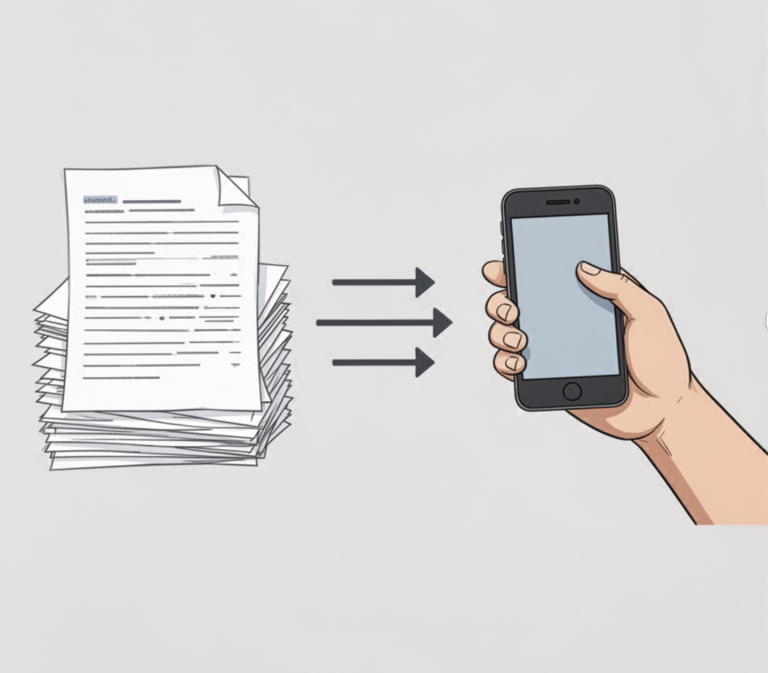
The customer worked completely paperbased. All stock movements and changes were noted down on transaction documents, where different transactions needed different documents. The tills were the only exception where scanners were introduced already some time ago.
To get an idea of the scale just some examples:
- 40.000 employees needed system access where most of them workes exclusively on paper before.
- 15.000 wireless access points had to be mounted across 350 units
- mobile devices had to be selected and purchased
- 30 distribution units and 1000 Suppliers around the world had to introduce new pallet labels including a scannable barcode
The entire initiative was split up into several sub streams where the biggest parts were the implementation of a GS1 compliant SSCC through the supply chain, the creation and implementation of a standard network setup and the development and implementation of the application as such.
When I joined the piloting of a bough solution came close to its end and I was supposed to support in the roll out. Appr. 8 weeks later the pilot and the cooperation with the IT Vendor was closed unsuccessful and we had to start from scratch. While this was of course a disaster for the customer it was for me the starting point in my current profession.
The decision was taken to stop the initial project and instead build a team which can deliver an internally developed prototype within 10 month.
Even though I had little to no experience in IT development and project work in general I was considered as team member due to my domain knowledge.
Based on that knowledge a rough sketch of the major processes in the operational units was created and the decision was taken build a prototype which handles only the inbound process.
This because it required only a limited amount of end users to be involved a limited area to be covered with wireless and it had easy to identify one directional handover points to the other processes in a unit.
03 - high speed
At those times I thought this is how project work is supposed to be. Today I would consider those first few months more as a technical dept factory, but it was a great opportunity for everyone to learn from mistakes.
After some time we became better at documenting processes and working methods in a way taht was understandable and translatable for the IT engineers. We spent hours and days on creating BPMNs and created very detailed business requirment documents including functional and nonfunctional requirments, business logic and UI design.
Due to lack of knowledge we worked with the tools for a waterfall approach but based on the extreme time pressure we actually worked agile without knowing and without the correct tools.
However, after 9 months a first pilot was up and running with a prototype and 4 months later and a lot a fixes and improvements the requested 4 pilots in EU and NA were up and running and we were able to start the benefit measurement.
04 - benefits
Based on the original process analysis we performed in all pilot stores time in motion studies before the go-live. After the go-live we waited 2 weeks for the first productivity dip and re-did the same studies. The potential savings identified during those studies as well as the user feedback was outstanding.
The result was that good that we got the approval to continue. So we continued for 2 more years and developed the initial application further to handle next to the inbound as well all the warehouse movements, internal transactions like decoration withdrawl or damages, the stock check and a huge part of the recovery / re-use flow.
After a bit more than 3 years the project was closed and is until today considered as one of the most successful projects at that customer.
05 - in between
During 2010 I took the role of the Solution owner for the tool we developed and through the next moths I focused on fixing some of the dept the project left behind and whenever possible to deliver smaller improvements or where needed adjustments to changed legal requirements.
The focus during this time was to build up competence in the line organisation. While the tool was built always with the clear focus on "simple for the many" the variety of configuration options to be handled by the unit or country experts was quite huge. A super User network was initiated and after some more months we managed to establish in every country at least one "go-to" person, which was able to solve problems support on expansion projects and collect feedback from the units.
06 - next step
In 2011 the budget was approved to investigate the options to enlarge the scope of the tool again. This time scope was on the outbound process. In my role as solution owner, I formed a small team of 3 business and 4 IT people and created a first prototype for a picking module which supported the picking and checking of customer orders.
After 6 months we went live in 3 test units and started to collect feedback. This time the feedback and the benefit results weren't as good. There were several problems with the routing for the order picker and the at that time quite bulky mobile device was disturbing for the user during the picking process. The users preferred the old paper sheet.
We collected a lot of feedback and findings, and one out of three stores decided to continue with this prototype while the other two stores went back to paper.
Still the conclusion was that there is a lot of potential and the prototype served as the base for a new project which delivered during the next 24 month a very well received picking module. But that happened without me, since I started on something new once the prototype and the investigation project were concluded.